With each passing year, technology advances more and more. Media that some thought would never change are becoming digitalized and transformed to be more accessible for the users/audience. For example: people now have the option of reading a book on their iPad or Kindle, or even listening to a podcast of someone else reading it for them instead of having to carry around a book. Things in paper form are becoming obsolete, and the more electronically-ready something is, the more likely it is to survive. In a piece entitled “For the love of reading,” the author experimented with different mediums to use in order to read, and found that she loved having the actual book and experience of reading overall. For many others, things like reading a book or reading a newspaper are the same for them - even if they are reading on a screen because we live in a fast-paced world where convenience often wins over quality.
Newspapers are facing the same problem as books, but on a grander level. Newspaper revenue relies heavily on ads, and so, with newspapers moving online, the ads now must also move online. The subscriptions that papers get are now also jeopardized because people can get their news for free after just logging onto their computers. The industry itself has had to adapt to the digitizing of society, and now the “old” newspaper has no choice but to move online. If certain newspapers can not adapt, they’ll basically be extinct.
The next type of changing media is the well-known song decoder, Pandora. Pandora has brought something new to personalized radio. By choosing only one song, “musicologists” are able to match your song preference to songs that are similar in genre and style. The result is a fascinating smorgasbord of music you might not have ever heard, or might have forgotten about. I believe that radio’s future looks promising in the form of Pandora because it will give new artists a chance to be listened to by a wide audience, and it will seem almost accidental when a new fan is created. DJ’s and radio stations are told to play certain types of music as priority because of how much they’re paid, and I’d like to believe that Pandora has allowed for it to be fairer for new artists.
Joshua Meyrowitz discusses the separation of social space from physical place with some of his theories about electronic media’s influence on society. What this means is that before electronic media, there existed a time when a physical place was what you needed in order to socialize. There was no Internet or cyber, instantaneous communication, and even once there was, it was never to the overly specific degree that it is now. To communicate, you did so through actual physical channels such as roads and railroads. Things then moved onto telegraphs, telephones, and radios. Now communication is simply a click or a touch away. There has been a creation of something known as “social space,” where interaction is no longer physical. For a person to experience an event, it does not need to be “live” anymore.
The same can be said for getting to know a person. There are now non-visible networks online that can essentially choose your friends for you based on common interests, and even allow you to stay in close contact with them electronically. New kinds of relationships are built that way. When unifying technology first emerged like with the creation of the radio, the listener was an active participant and though miles apart from the others listening, they still had a common bond. Mary Dyck, as described in “The Radio Diary of Mary Dyck” grew attached to her radio and it began to function as both a companion and connector to the outside world.
As time went on, this interconnectivity with the radio flourished even more for the general public with emerging new media and different types of social networks. This is when para-social relationships were formed, meaning, relationships that are mediated but still resemble face-to-face interaction because of the medium through which they travel. The viewers begin to believe that they “know” the other people on the end of the information spectrum, similar to the way an audience might feel they know the character of a movie so well.
To thank for this, we have examples of ambient awareness such as Twitter and Facebook, where your friends and followers are your personal audience. Because of Twitter’s streaming of meaningless updates and Facebook’s perfectly engineered stalking mechanisms, they are able to pick up on the feelings, habits, and mood changes of all of their friends without exerting the physical energy. This makes it easier for them to develop relationships with the person because, in a sense, Facebook is doing it for them. The same can be applied to instant messaging – it’s automatic responses, which can further relationships and paint a picture of the person you’re speaking to on the other end. Now that Facebook has found a way to combine IMing with their site, the para-social interactions are enhanced and showing how much socializing is evolving.
1.This society has become accustomed to instantaneous answers which is shown with the growing popularity of Twitter and YouTube. These fairly new media bring in audiences because they are more willing to cut to the chase with their content. People now prefer to tune into information that is immediately available, rather than something that is analyzed, and carefully thought out. For example, instead of reading an entire news story a person is now more likely to look for a sound clip, sound bite, or short blurb. This makes it harder for individuals to develop an opinion on their own. When watching a play or movie, people will text or tweet, and they won’t give the show a chance to win them over. This pre-judging then enters the cyber world for others to adopt as their own opinions. Even scholars are guilty of falling prey to this simplified way of researching. Instead of sifting through stacks of literature, they might only search online.
2. The term “cyberkalnization” refers to the division in the World Wide Web into subgroups. People now can subscribe to only receive the specialized news that they like to hear about, and exclude everything else from getting to them. With automatically updated feeds, people are avoiding having any serendipitous encounters that might infiltrate their thoughts on what they are already use to. I am also somewhat guilty of this myself. I follow only those with opinions that I already have myself on Twitter. I know personally of people who receive Yahoo news feeds that focus only on entertainment news or sports news because they aren’t concerned with any other news. In a way, this specifically engineered filtering is beneficial for you if you only want what you’re use to. It bypasses all the extra news so that you don’t have to sift through it yourself.
3. These trends might take away from the audience that usually tuned into authors, composers, and filmmakers because if people can get a concise yet entertaining piece of their work, they won’t be inclined to look for more. The re-produced work, to them, is just as good as the original work and possibly better because you can get it in smaller portions and have it include the parts you like. These creators of original works will have their thoughts recycled, and even though it’ll be works without context, the truth is that people aren’t craving context anymore.
4. Appropriation art means giving credit to any part of a piece that was inspired by something else. This is a way to copyright, in some ways, an artist’s idea and to make sure that credit is given to a creator. The author argues that everything, especially words are owned by “owned by our entire culture,” and with a little revision and slight credit, it is okay to duplicate this. As Journalism major, I partially agree with this because I know I would not want my ideas to be copied in any way, unless full credit was being given to me. However, I think that when it comes to other forms of art, outside of written works, it gets more difficult to give credit.
5. The idea of an audience is described as archaic because we live in a time when the audience’s opinion doesn’t seem to matter. In a 2005 issue of Wired magazine the information we are given is described as “an endless, recombinant, and fundamentally social process generated by countless hours of creative product.” What the audience is receiving is a “mash up” of the same ideas from years worth of fandom that are just repackaged. Our online media is a culture of reaction from other thoughts without any new actions of our own. Most online responses are driven by the sphere of old media.
The Simpson is an interesting cartoon to evaluate because in many ways it’s a combination of a domestic situation comedy (sitcom) and a regular animated cartoon. The characters have distinct personalities as cartoons, and each one plays a different consistent role throughout each episode. Beginning with Homer Simpson, we see the atypical dysfunctional father. Homer is not like the father on Father Knows Best, who is authoritative and concerned with slight hints of wit in his conversations. He’s actually more like Al Bundy from Married With Children and the father from Roseanne, who has more of a conflicting relationship with this wife and children. He does not live his life wearing a suit even when in the house, but instead is the average blue-collared worker dealing with criticism from his wife, children, and society. He faces outlandish dilemmas in each episode and has to work with his wife, Marge (who does assume the motherly housewife role well) to do what’s best for his family – but mostly, for himself. He is not wise beyond belief, offering great advice to his kids. Homer is just the representation of an average father who is not planning on winning Father of the Year.
The Simpson family lives in the confines of the suburbs in Springfield, and have all the elements for the basic sitcom family formula. While there are certain instances in the show that seem unrealistic, overall the Simpson family is relatable because they are not like the endlessly responsible families in traditional sitcoms such as the Huxtables (The Cosby Show) or the Keatons. The things the Simpsons deal with are family issues with a twist. The kids are good at the end of the day, but Bart Simpson is always the problem child. In a way, the antics of Homer and Bart are what carry the show’s plot. Things like alien invasions or nuclear power plant explosions might come up in an episode of the Simpsons, but it would still be presented in a believable way. If someone has an anvil dropped on them, for example, the audience would be shown the pain in some way and the character will not get up and walk around like nothing ever happened.
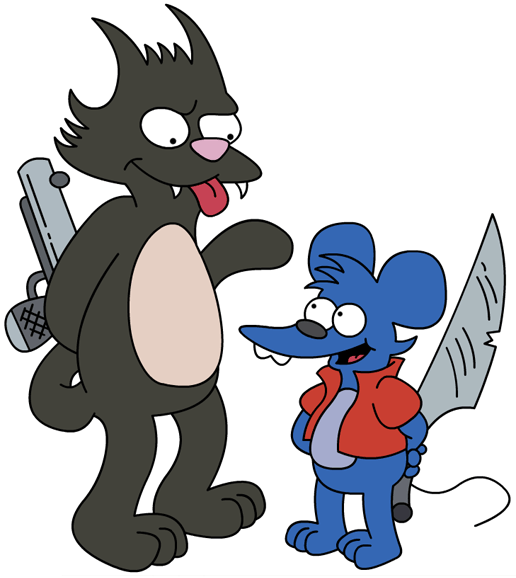
One way The Simpsons uses traditional genres from sitcoms and cartoons to successfully bring everything together can be traced back to Warner Brothers cartoons of the 40’s and 50’s. These cartoon characters were made for the general audience and even those sophisticated members of society thought they were appealing. As decades went on, cartoons were stereotyped as being for children and finally once cartoons like the Simpsons came along, adults were returning as an audience. The animation appealed to the younger set but the dirty jokes and adult themes brought in the older set. There were cartoon predecessors like The Flintstones and The Jetsons that started this, but The Simpsons was more of a modern-day cartoon with real-life crisis. Other things within The Simpsons that drew in that postmodern audience is the cartoon they watch called Itchy and Scratchy, which is a sadistic satire of Tom and Jerry. The Simpsons does not succumb to traditional sitcom rules, and that is what makes it so appealing.
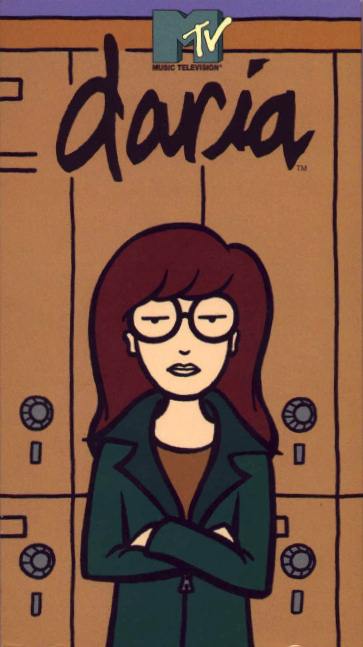
There are now more shows like that such as Family Guy, a personal favorite of mine. Then there’s Daria – a show I use to watch when new episodes were being made regularly. With Family Guy, I realized that there were certain similarities between the loaf-ish father in that cartoon and Homer in The Simpsons. The kids were more as back up characters, but the parents were very similar to the yellow-skinned inhabitants of that pink house in Springfield. Daria is an example of a cartoon show where the main character has a typical family, but basically has the focus on her and her sarcastic life comments. It’s like the reversal of what The Simpson’s does – instead of being about one dysfunctional family, it’s about one dysfunctional girl.
As a young horror-movie fan I was never excited to see Jason in the plethora ofHalloween’s or Freddy in ANightmare on Elm Street. I will admit that Jason had this kind of admirable determination to aggressively kill teenagers just because, and Freddy had the fact that he could get into your dreams and do some serious damage – the place you should have been able to escape to – working for him. With these things, and by following the blood-spilling guru himself, Alfred Hitchcock in his movie Psycho(1960), they’ve set the bar high for other slasher films. What then happened was either an attempt at mimicking their slasher techniques, or a seemingly endless loop of re-makes and sequels to try to capture that audience’s attention. This worked on me for a little while, but there was one slasher who I believe did not get the kind of recognition he deserved.
Charles Lee Ray or “Chucky” was the star of Child’s Play(1988), and yes, I am fully aware that he is a doll that can be easily kicked into another room if he tries to attack you. What Chucky critics failed to realize was that his size worked as much for him as it worked against him. My fondest memories (if that’s what you’d like to call it) of Chucky is in the very first movie. As Clover points out, most successful slasher films have a formula that has been working for them: the killer is a psychotic product of a sick family or disturbing past – yet still human, the victim is almost always young, female, and beautiful, the location is a “Terrible Place”, and the weapons used are everything but a gun. Chucky did not escape all these predictable slasher traits, but certainly had some of his own.
The antagonist himself, while a slasher, was creative in his overall presentation. Chucky was not always a killer doll – originally Charles Lee Ray was a serial killer who sought refuge in the body of a “Good Guys” doll using voodoo to transfer his soul. The history behind why Chucky is a serial killer is never fully disclosed, but it’s obvious in the beginning of the film that he has some background with the mafia. It’s safe to assume that because of how most slasher films are, his family life probably played a part in his insanity. The way he makes his way into the lives of the family he chooses to terrorize is fortuitous: a homeless gives him to the victim who is the young, beautiful and blonde Karen Barclay (Catherine Hicks) who then gives him to her son, Andy. All of this works out in Chucky’s favor because now he has a young soul to go into.
The storyline of the movie basically just follows Chucky as he tries to take over Andy’s body and kills anyone who tries to stand in the way. The death count includes people like innocent bystanders and custodians who had the nerve to lock doors that Chucky wasn’t tall enough to reach anyway. Unlike other killers, Chucky had a purpose that was present through out every subsequent movie, and that was to be human again. He killed like other killers did - in an out-of-the-box kind of way.
One scene in particular stuck out (in Child's Play 3) when it showed a garbage man being crushed to death by his own truck once Chucky took the control after tricking him into thinking a child was stuck. This is an example of the death of a male being viewed as more common, while the death of a female is usually drawn out. To me, this was proof that his size had nothing to do with his clever plans. He was able to scurry past his victims in the blink of an eye and hide in places where normal-sized people would not have fit. Chucky was very much a killer you should take seriously.
With Karen, her encounter with Chucky in the living room when she realized the doll was alive was like a game of tit-for-tat. They went back and forth with Chucky slicing her ankle and her then propelling him behind a couch. Karen was the distressed female, but of course, she survives in the movie.
I believe that Chucky was a successful slasher in his early years. As time went on, him getting married and having kids were clearly just to squeeze more movies out and eventually his time was up. The teeny boppers that are drawn to anything that heightens their senses, whether it be sexually or psychologically, started to lose interest when the plot for killing no longer made sense. However, in his prime, Chucky did exactly what a slasher was supposed to do, and that was have you fear the act of death and not so much the unkillable killer.
1.)Some factors within the radio industry itself that led to rising FM radio came from both the DJs and the changing society around them. The DJs were able to play, essentially, whatever they wanted and because there was so many societal movements taking place at once, their format reflected that. The news programs on the radio as well as the music had a progressive format and was able to get people rallied up and encourage them to get involved in whatever movement was being broadcasted. Corporations believed that they needed to start taking over because they couldn’t afford to take any chances. Eventually radio station owners tried to “polish up” the content (Ie: forcing them to wear ties to work, banning certain programming) but a strike followed. FM radio remained having the freedom that strict AM radio doesn’t allow.
2.)The growth of rock FM can be greatly attributed to the social changes and events of the late 60’s-mid 70’s period. Some of the movements included ecology, civil rights, women’s rights, and anti-war protests. The music played on rock FM appealed to a lot of the younger generation who were looking for an alternative music choice to fit their alternative lifestyle. Many lived a hippie-styled life, and were big fans of this progressive music that was not tightly controlled like AM radio.
3.)New York started off one change with FM radio by creating the first rock station that played “Wild Thing” by The Troggs. Rock proceeded to be a major music genre during upcoming years. Along with that, DJs were using their shows to tackle controversial topics and help bring people together so that they could understand that they are not alone in their ideas. Another thing that FM radio started was a woman being on the air. The first female radio personality was Allison Steele, who had a unique and sultry voice. Now female DJs have an increased voice in that industry.
4.)In the early years of radio economic support came from the listeners who felt strongly about the social change that FM radio was pushing for. FM radio was extremely popular, and so eventually cars were made with that radio frequency already installed. The listenership is what made the radio so successful.
Twitter is enduring because of its accessibility (it’s mobile, and right there at your fingertips) and because it allows you to know miniscule things about your friends that you never thought you’d care about. More importantly, if you’re following someone who actually has vital information, their tweets can be accompanied by useful links. Twitter is what you make of it – if you choose to follow someone whose tweets won’t contribute anything to your life, then you won’t see the good in Twitter. The act of “tweeting” something is easy, and you may begin to forget how quickly your thoughts are being broadcasted. What you will be comfortable in knowing is that whatever information you might be putting out – useless or otherwise – there is someone reading it.
This particular form of online social networking connects you to information that you might not have ever had access to. For example, if you’re following one of your favorite entertainers and they happen to be in the area you live in, they may tweet about a free concert that only their followers would be aware of. This is just one of the advantages to opening up and allowing yourself to be immersed in the world of Twitter.
 Newspapers are facing the same problem as books, but on a grander level. Newspaper revenue relies heavily on ads, and so, with newspapers moving online, the ads now must also move online. The subscriptions that papers get are now also jeopardized because people can get their news for free after just logging onto their computers. The industry itself has had to adapt to the digitizing of society, and now the “old” newspaper has no choice but to move online. If certain newspapers can not adapt, they’ll basically be extinct.

 Full cartoon