Showing posts with label it's funny because it's true. Show all posts

Wednesday, May 5, 2010

Theme 6: Analyzing the wiki-concept


The beauty of sites like Twitter and Facebook being invented is that they give us a chance to expand upon our social networking skills by allowing the technology to do most of the work and us to just decipher it. Some benefits include it allowing people to multi-task and not have to devote time to getting to know a person in a physical sense. However, the consequences include us learning the surface of what makes up a person’s personality, and not necessarily getting a deep understanding of who they are. You cannot see their facial expressions through an IM, and all you’re doing through out your cyber contacting is making an educated guess as to who you think they are. Social networking sites and the Internet overall, since their creation, have slowly began to control the thoughts of the individuals reading into them. They have made people more likely to scan blurbs, listen quickly to sound bytes, and Facebook-stalk a person in order to learn about their likes and dislikes. These advents have encouraged their audience to become lazy, because they do most of the work for us, and we don’t need to utilize those inquisitive parts of our brains anymore.


Wikipedia is another example of our now trained-to-be-impatient mindset. This website is a host of information on various topics that may or may not be accurate. Wikipedia allows users like you and I to log on and update whatever is on their site. There is minimal moderation, which means that although everyone has a chance to put their thoughts on, there’s a good chance that what you’re reading is not from an expert. What you have instead is the community’s view, and at times, the community can be warped and biased because of outside influences.


Television shows have the same community views associated with them when there is a successful series. Take for example True Blood, a show about vampires (which already had a community fan base because of Twilight). Followers of the show would update their Twitter and Facebook statuses respectively and post on forums all catering to those interested in the show. They have a chance to put their opinions on the screens of every fans’ computers. Some problems that might have stemmed from that is with instant posts popping up, the readers don’t really give the show a chance to grow on them. If someone gives away an upcoming scene and speaks about it negatively, the other viewers might not want to give it the time of day. It’s like reading reviews that pre-judged all of the time.


Other issues with this kind of crowd-sourcing is that it has pitfalls such as there being difficulty with coming up with a general conclusion that everyone agrees upon, as well as there being written contracts and disclosure agreements. This community of informants make their lives and thoughts less private and more publicly exposed – and from this, they can be accepted or ignored. These specialized online groups have a chance to exchange thoughts in a safe forum, and spread their knowledge to others. There is a sense of an online family or community built because of what they all have in common.

Theme 4: MacLuhan and changing thought processes

Marshall MacLuhan had many theories – some that seemed more plausible than others – and one in particular spoke about how media can take on the qualities of “intellectual technologies,” and that these media shape our thought processes. It appears that, for the most part, the mediums of information that we use do the bulk of thinking for us. The message that the medium might appear to give off isn’t what is truly the message. The medium itself is the message, and what this means is that social networks such a Twitter and Facebook can give you information about people without you even looking for it. You don’t have to do the work of getting to know a person by actually speaking to them and hoping for good, productive conversations. Instead, Facebook will do the work for you by combining status updates that might be mundane and repetitive on their own, but together can provide more insight into a person. These technologies are socializing for you.


This is also the case when it comes to search engines and smart phones that house search engine apps. Personally, I know that I don’t make the effort of trying to remember my own mother’s cell phone number by heart because I know it’s saved in my cell phone. My iPhone is becoming more than just an extension of my memory – it is my memory. Smart phones know all of your contacts’ information and usually have GPS systems already built-in so getting lost and having to find your way back using brain power is no longer an issue.


Google further perpetuates this change in thought processes. In Is Google Making Us Stupid the author speaks more about how people are being “dumbed down” because they have so much assistance from new technologies. The Internet does not only supply us with information, but it also shapes our thoughts. Whatever was planted to come up first in a search engine is what we feed off of and take in as legit information. Research that would have equated to hours in some library can now be done in a matter of minutes. Our minds are use to what is convenient, rather than what is substantial. Because of this, we are “loosing our capacity to concentrate,” and essentially loosing that which would make some of us intellectually elevated.


The new generation of tech-savvy people growing up now heavily rely on what technology provides. Children ages 10 and younger are taught that swiping their finger across a screen can get them an answer, and that typing in a key word will reveal the truth about something. What they are actually getting is a condensed opinion that they will unfortunately adopt as their own because their minds have not been trained to question ideas. They are taking on an old person’s way of thinking at an early age because of their limited exposure. This will also make them (and others living in this digital age) less inclined to read books. This fast-paced generation of people want instantaneous results to cater to their diminishing patience. This is a generation of multi-taskers, and so, spending time reading a book is less likely to happen now. What most people will do is skim over something and look for the highlights instead of fully absorbing something new. Why do the work when a podcast summary can do it for you?

Monday, April 19, 2010

The Simpsons Response


The Simpson is an interesting cartoon to evaluate because in many ways it’s a combination of a domestic situation comedy (sitcom) and a regular animated cartoon. The characters have distinct personalities as cartoons, and each one plays a different consistent role throughout each episode. Beginning with Homer Simpson, we see the atypical dysfunctional father. Homer is not like the father on Father Knows Best, who is authoritative and concerned with slight hints of wit in his conversations. He’s actually more like Al Bundy from Married With Children and the father from Roseanne, who has more of a conflicting relationship with this wife and children. He does not live his life wearing a suit even when in the house, but instead is the average blue-collared worker dealing with criticism from his wife, children, and society. He faces outlandish dilemmas in each episode and has to work with his wife, Marge (who does assume the motherly housewife role well) to do what’s best for his family – but mostly, for himself. He is not wise beyond belief, offering great advice to his kids. Homer is just the representation of an average father who is not planning on winning Father of the Year.


The Simpson family lives in the confines of the suburbs in Springfield, and have all the elements for the basic sitcom family formula. While there are certain instances in the show that seem unrealistic, overall the Simpson family is relatable because they are not like the endlessly responsible families in traditional sitcoms such as the Huxtables (The Cosby Show) or the Keatons. The things the Simpsons deal with are family issues with a twist. The kids are good at the end of the day, but Bart Simpson is always the problem child. In a way, the antics of Homer and Bart are what carry the show’s plot. Things like alien invasions or nuclear power plant explosions might come up in an episode of the Simpsons, but it would still be presented in a believable way. If someone has an anvil dropped on them, for example, the audience would be shown the pain in some way and the character will not get up and walk around like nothing ever happened.


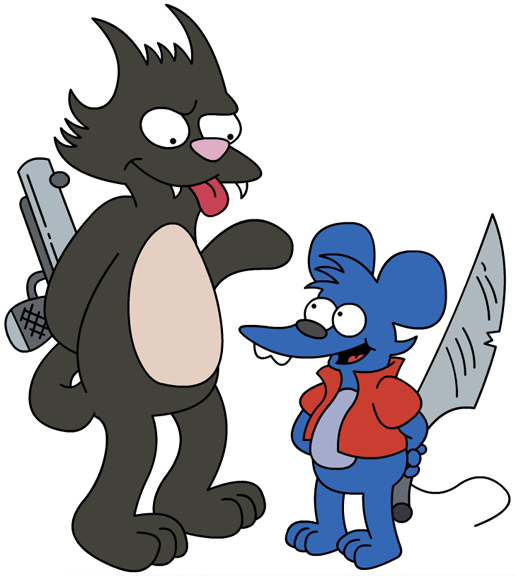
One way The Simpsons uses traditional genres from sitcoms and cartoons to successfully bring everything together can be traced back to Warner Brothers cartoons of the 40’s and 50’s. These cartoon characters were made for the general audience and even those sophisticated members of society thought they were appealing. As decades went on, cartoons were stereotyped as being for children and finally once cartoons like the Simpsons came along, adults were returning as an audience. The animation appealed to the younger set but the dirty jokes and adult themes brought in the older set. There were cartoon predecessors like The Flintstones and The Jetsons that started this, but The Simpsons was more of a modern-day cartoon with real-life crisis. Other things within The Simpsons that drew in that postmodern audience is the cartoon they watch called Itchy and Scratchy, which is a sadistic satire of Tom and Jerry. The Simpsons does not succumb to traditional sitcom rules, and that is what makes it so appealing.


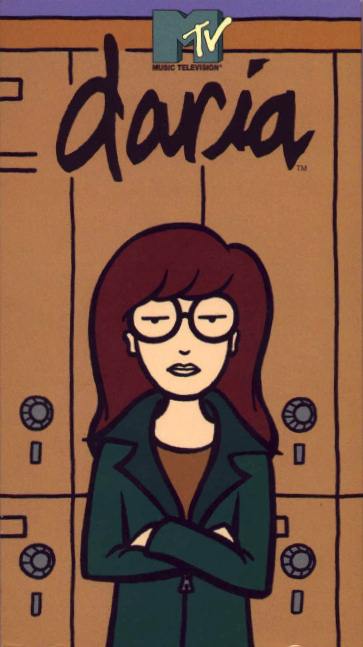
There are now more shows like that such as Family Guy, a personal favorite of mine. Then there’s Daria – a show I use to watch when new episodes were being made regularly. With Family Guy, I realized that there were certain similarities between the loaf-ish father in that cartoon and Homer in The Simpsons. The kids were more as back up characters, but the parents were very similar to the yellow-skinned inhabitants of that pink house in Springfield. Daria is an example of a cartoon show where the main character has a typical family, but basically has the focus on her and her sarcastic life comments. It’s like the reversal of what The Simpson’s does – instead of being about one dysfunctional family, it’s about one dysfunctional girl.


Tuesday, February 16, 2010

Monday, February 15, 2010

Blame it on the cold

One more day till I'm free!

& surprisingly, I feel great (dun na na na na na na na). In all seriousness though, I'm not missing Twitter all that much. It's like I'm going back to life before Twitter, and I'm starting to remember how I use to find out what everyone was doing: by asking.

In the beginning I wanted to make a big deal about this, but not tweeting really isn't a big deal at all. I'm glad that I was able to tear myself away from this little bit of technology. It taught me that I have self-control, and that even if I can't deny how much other forms of media have a hold on my life, at least I could stop doing this one thing.

I just told my friends about my little experiment and they're all saying they miss my tweets and that they couldn't believe that I - the person who got them all hooked on Twitter, Twitter's biggest fan and poster child - was able to stop for even a few days. Um, I'm sorry? -_-

Aside from Twitter deprivation, I've been sick and that might have added to me not feeling the need to tweet my misery. This is most likely from yesterday in the city, since I decided to look cute I didn't dress for the weather. I did, however, see Avatar in 3D (Finally! & it's my new favorite movie of 2010. I cried. Again) and get these delicious, heaven-on-earth-tastin' cupcakes. . .


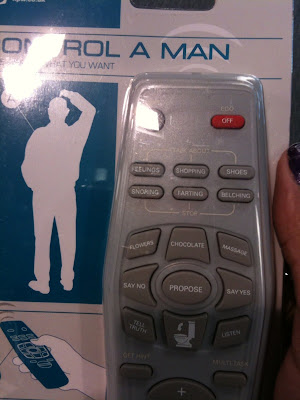
And consider investing in this highly unnecessary, but cute gadget. .

But enough about me. Hopefully everyone had a stellar v-day and isn't feeling too media starved.


Sunday, February 14, 2010

Blogging is my anti-drug

It's really becoming my anti drug. And this is actually a good thing : ) I needed something to force me to blog.

So we're at Day 3, or the hump day, and I must say - things are getting a little easier. Last night I went out with a few friends and really wanted to tweet about some of the nonsense I was witnessing in the club, but I actually decided to make conversation with people. (That was a good and bad idea, btw)

A lot of other media deprived blogs are mentioning how much free time they have since they're not surfing the net or watching tv, but cutting Twitter out of my life hasn't exactly freed up a lot of time. I still have plenty of other apps on my phone and games I could play. I think that to really get the full effect of the assignment, I should have *gulp* cut out all things relating to my iLifeline (iPhone), because I really depend on that too much. OH well - that wasn't the assignment : )

Today I'm heading into the city (so excited! I'm such a Long Islander) and I KNOW I am going to want to Tweet about how much Valentine's Day is on steroids. I'm going to want to twitpic, but I'll relax. The city trip will be with someone who equally refuses to recognize this bogus holiday (disclaimer: while we happen to be heading out on Valentine's day, just know that this is to take advantage of the deals. . .And laugh at people like you who will be publicly swapping spit today *cringe*)

Anyway, that's all for now. Enjoy your V-day, lovers.

Saturday, February 13, 2010

No one ever said it was easy. . .

. . .But no one ever said it would be so hard -_-

Day One of socializing as a real person has been interesting. Technically, this is day 2 - but this is the first day I've actually started to feel some withdrawal symptoms. Ironically, not being able to tweet (or check on the tweets of others. . .I've decided I won't cheat in that way) has actually made me more anti-social. Crazy, huh? When I don't know what everyone's doing because I'm avoiding their timeline, I don't know what's "good for the night."

I'm a techy kind of girl - I like not having to knock on doors or serendipitously run into people to make social plans. Luckily, I can still text. The downside to that is that I never mentioned before that I shy away from texting people. I think it's kind of invasive. . .(Yes, this coming from a girl who follows her friends. But hey, they don't know how much I watch them). Besides, I'd much rather be pursued. Blame it on the Leo in me.

And since texting is pretty much out, it doesn't help that I'm becoming allergic to all Facebook's foolery. Don't get me wrong - I'm not planning on deleting it. I just haven't had any reason to go on it recently. Why? Because I have no new pictures. Why? Because I don't know what everyone's doing with their lives "/

My biggest issue with Twitter is this:
That little icon on the main screen of my phone. I'm considering deleting it, only because I'm tired of looking at it and having it be the only thing I can't touch.

The truly sad part about this is that I feel like everything tweet-worthy happens when you're trying to refrain from tweeting. Or maybe that's the Twitter addict in me talking. . .all I really did today was go to Ikea (an AMAZING store, btw. Same category as Michaels), get my hair done, and watch a movie. Someone please explain to me why I felt the need to fake tweet these things on the memo pad on my phone. . .

"Spending some QT with my baby sister."

"The movie Valentine's Day has got to be the cutest, horribly-acted tear-jerker I've seen in a while. It did it's job, guys. Shoutout to Ashton Kutcher for being the lovable guy next door. Again."

"Keep your friends close. . ."

Did any of those things have some amazing and enlightening content in them? Of course not. I just felt like people would like to know and for whatever reason, I think I might actually tweet them at a later date. Just so people have an idea of what I did.

*sigh* pray for me.